What a sweet job! Visiting flowers here and there, like these beautiful roses at the Woodlawn Road entrance to Niagara College, doing your thing for the hive, and if you get tired while on the job, lying down for a break. Who’s going to know? Can’t get any better than this. /Joe Barkovich photos
Please support/attend this milestone anniversary celebration
Welland-based Croatian cultural organization celebrates its 100th anniversary Oct. 12. Planned is a gala reception and concert. For further details about the event please call 905-735-5089.
Boats waiting for their respective start at today’s Head of the Welland Five Bridges regatta. The view is from Woodlawn Bridge./Joe Barkovich photo.
The South Niagara Rowing Club is proud to host the Head of the Welland Regatta. Head races are time trial/professional races that typically take place in early autumn. Boats begin with a rolling start at intervals of 10-20 seconds and are timed over a set distance.
The 5.3 kilometre race on the Welland Recreational Canal takes the athletes through the heart of Welland, traveling under 5 different bridges that span its banks. Annually, the Head of the Welland attracts about 1,000 high school, university, developmental youth rowers and masters athletes and an additional 400 spectators / parents / coaches from Ontario, and many neighbouring states.Today’s event has 363 entries.
The subtle twists and turns of the waterway, punctuated with its multiple and sizable bridge abutments make for exciting racing and risk-reward areas for passing slower crews. Racers finish at the beautiful Welland International Flatwater Centre.
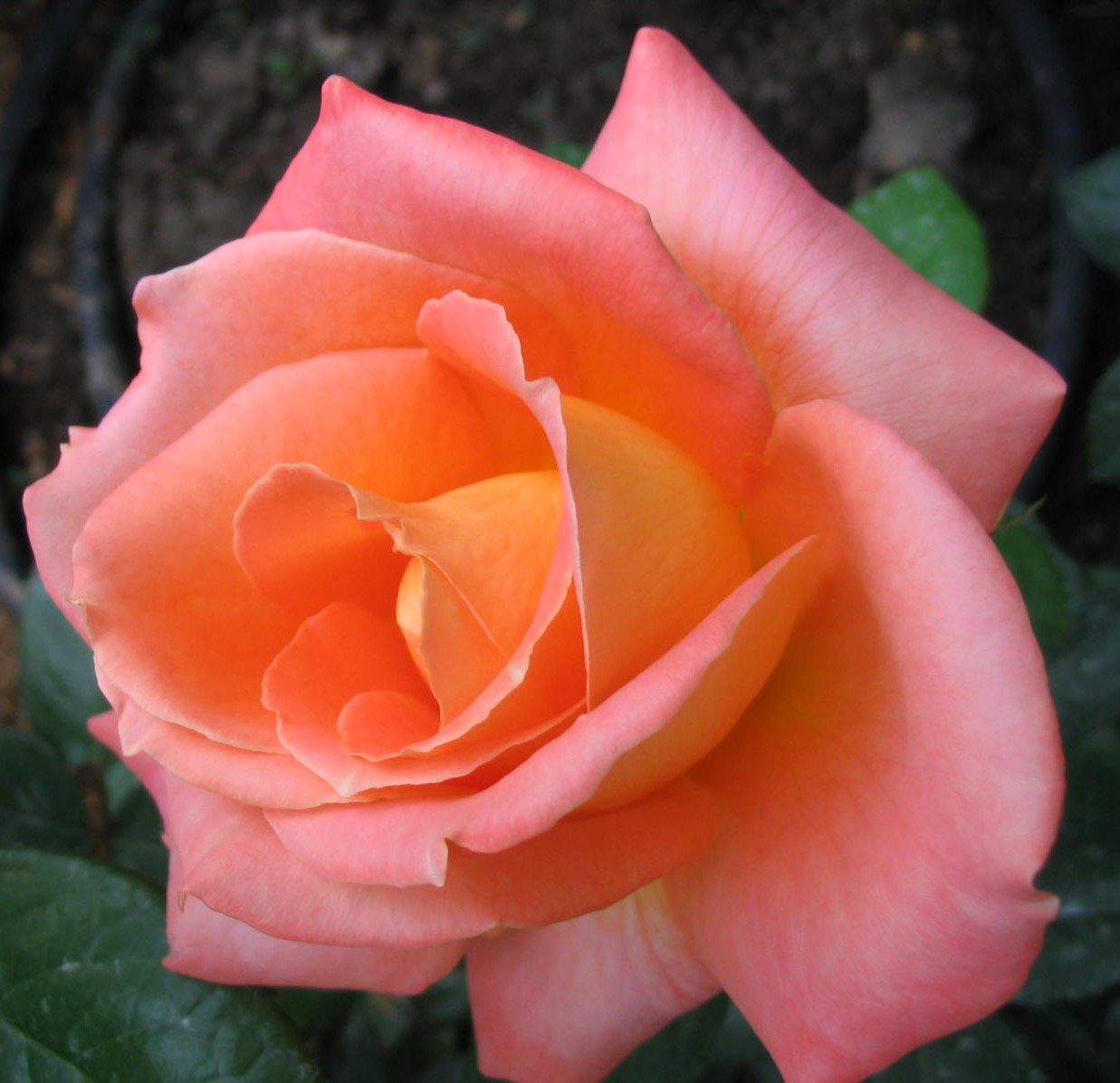
What helps us decide to purchase a particular rose? Perhaps it is their fragrance. Some are more fragrant than others and it’s easy to get “hooked” on fragrance in such a way that you just have to have that rose. Other times it could be colour, always a powerful influencer – a deep, deep red or a brilliant yellow, or a tantalizing pink that wins you over. Or it could be the name, name can pique curiosity about a rose. This rose, above, is Delany Sisters, a pink blend grandiflora. Where did that name come from? Who were the Delany Sisters.
Here is some of their background: “The Delany sisters, Sarah Louise Delany (1889–1999) and Annie Elizabeth Delany (1891–1995), were remarkable African-American women who made significant contributions to education and civil rights in the United States.
Sarah Louise Delany, often called Sadie, was the first African-American permitted to teach domestic science at the high school level in New York City. She earned her bachelor’s degree from Columbia University in 1920 and her master’s degree in education in 1925.
Annie Elizabeth Delany, known as Bessie, was the second African-American woman licensed to practice dentistry in New York State. She graduated from Columbia University’s School of Dental and Oral Surgery in 1923.
The sisters gained widespread recognition later in life with the publication of their joint autobiography, “Having Our Say: The Delany Sisters’ First 100 Years,” in 1993. The book, which became a bestseller, offers a vivid account of their lives and the challenges they faced growing up in the Jim Crow South and later in Harlem, New York. It was later adapted into a successful Broadway play and a television film.”
The rose bearing their name was created by hybridizer J.B. Williams of Silver Spring, Maryland. All this, and more, is available online.
In my garden, this rose can be counted on to provide flowers from late May into November. Looking at it through my window, I can see about a dozen flowers on it now. Always a joy to behold.
Gadabout Gardener is a recurring feature on the blog, appearing until the end of September./ Joe Barkovich photos.
Rowers arriving at the starting area near Woodlawn Bridge for today’s 42nd annual Head of the Welland Five Bridges Fall Classic, sponsored by South Niagara Rowing Club. This photo was taken at 9:31 a.m. The event takes participants back down the recreational waterway and under the city’s five bridges to the finishing area at the Welland International Flatwater Centre. I consider this scene one of the prettiest sights in my View From The Bridge photo feature series. /View From The Bridge is a recurring feature on the blog. Joe Barkovich photo.
Please attend/support this anniversary-celebrating community event
St, Catharines Museum and Welland Canals Centre: We’re thrilled to announce the Welland Canal Bicentennial Travelling Lecture Series presented in partnership with our fellow canal-side museums in Port Colborne, Welland, and Thorold, to commemorate one of the first canal bicentennial anniversaries: 200 years since the sod-turning in 1824.
November 9: Port Colborne Museum November 16: Welland Museum November 23: Thorold Historical Museum November 30: St. Catharines Museum and Welland Canals Centre
WELLAND – To commemorate Franco-Ontarian Day, the City of Welland is proudly recognizing its Francophone community with a flag-raising ceremony at City Hall on Wednesday, September 25, at 9:30 a.m.
As one of Ontario’s 26 designated Francophone communities, Welland celebrates its rich Francophone heritage through various initiatives, including its Discover Welland – Découvrir website page, which offers French-language information and resources for residents and visitors.
“Franco-Ontarian Day is an opportunity to honour our French-speaking residents and appreciate their contributions to the cultural and historical fabric of our city,” said Mayor Frank Campion. “We are proud to fly the Franco-Ontarian flag as a symbol of our commitment to diversity and inclusion.”
Franco-Ontarian Day celebrates the province’s vibrant Francophone culture. The Franco-Ontarian flag was first raised in Sudbury in 1975, and it became the official emblem of Franco-Ontarians in June 2001. Its green and white colors, representing the summer and winter months respectively, are closely associated the community’s pride and heritage.
In recognition of the City’s efforts to advance the contributions of its Francophone community, the Honourable Caroline Mulroney, Minister of Francophone Affairs, wrote a letter to extend her support to Welland.
Welland célèbre la Journée franco-ontarienne par une cérémonie de levée du drapeau
WELLAND – Pour commémorer la Journée franco-ontarienne, la Ville de Welland est fière de reconnaître sa communauté francophone en organisant une cérémonie de lever du drapeau à l’hôtel de ville, le mercredi 25 septembre à 9 h 30.
En tant que l’une des 26 communautés désignées Francophones de l’Ontario, Welland célèbre son riche patrimoine francophone par le biais de diverses initiatives, notamment sa page Web Discover Welland – Découvrir, qui offre des renseignements et des ressources en français aux résidents et aux visiteurs.
“La Journée franco-ontarienne est l’occasion de rendre hommage à nos résidents francophones et d’apprécier leurs contributions au développement du patrimoine culturel et historique de notre ville,” a déclaré le maire Frank Campion. “Nous sommes fiers de faire flotter le drapeau franco-ontarien, symbole de notre engagement en matière de diversité et d’inclusion.”
La Journée franco-ontarienne célèbre la culture francophone dynamique de la province. Le drapeau franco-ontarien a été hissé pour la première fois à Sudbury en 1975 et est devenu l’emblème officiel des Franco-Ontariens en juin 2001. Ses couleurs verte et blanche, qui représentent respectivement les mois d’été et d’hiver, sont étroitement associées à la fierté et au patrimoine de la communauté.
En reconnaissance des efforts déployés par la ville pour mettre en valeur les contributions de sa communauté francophone, l’honorable Caroline Mulroney, ministre des Affaires francophones, a écrit une lettre pour exprimer son soutien à Welland.
Unveiling the plaque, from left: Tom Higginbotham, member of the Heritage Advisory Committee, Mayor Frank Campion, and Mary Adelle Patterson, chair of the Heritage Advisory Committee./Joe Barkovich photos.
WELLAND – A plaque unveiling Saturday behind Civic Square in downtown Welland received little public attention. Pity.
It was part of a designation ceremony for the Welland Canal Second Aqueduct. Relatively few people know much about the aqueduct but mention Cross Street swimming pool and it whets their curiosity and interest. The plaquing ceremony was followed by release of Places That Were.
According to historical information provided by City of Welland Heritage Advisory Committee, the stone aqueduct was built between 1842 and 1850 during construction of the Second Welland Canal to replace the original 1829 wooden aqueduct which carried the canal over the Welland River (Chippawa Creek).
“The first urban settlement in what is now Welland came about due to the necessity to construct an aqueduct (of which this is the earliest surviving example) over the Welland River and the nucleus and downtown core of the present city grew up around it. The settlement itself was first known as Aqueduct, later Merrittsville and finally Welland. The aqueduct, therefore, can be said to be the catalyst that created the community.”
Key attributes of the aqueduct that reflect its value as the oldest surviving aqueduct on the Welland Canal are:
Constructed of thousands of ashlar cut stones weighing approximately one ton each;
Consists of a series of four stone arches 45 feet wide with a span of 45 feet each capped with rows of stone “voussoirs” and stabilized with projecting buttresses that support a large trough (now infilled with earth) through which the canal and ships once passed;
When completed in the 1840s, the aqueduct measured 45 feet wide and 315 feet long;
May be the oldest surviving stone aqueduct to carry water transportation in Canada.
Local historian Terry Hughes brought along a collection of photos about the aqueduct and the swimming pool and answered questions from interested attendees.
Rose Dzugan, at the podium, shares insights about Places That Were with Mary Adelle Patterson, chair of the Welland Heritage Advisory Committee standing nearby./Anthony Gallaccio photo.
By Joe Barkovich, Scribbler-at-large
Take a walk down memory lane via Places That Were, by the City of Welland Heritage Advisory Committee and chances are you may not want to leave.
The 24-page book was released Saturday, September 21 during a program at city hall. If for sale, I’d say the committee would have a “best seller” on its hands, but lucky us, it’s available for free.
Contents include 40 images of “places that were” in Welland but for one reason or another no longer are with us. Some examples: Olympia Restaurant, Station Hotel, Welland High School, Aqueduct Swimming Pool, Merritt Park Bandshell, Dain City Railway Station, Atlas Steels and A&W Drive In. The images are accompanied by descriptive text about each.
Then there’s the cover photo. What a great choice by those who spent so much time putting this book, truly a labour of love, together!
“The cover shows a young boy looking eagerly at the posters on the ticket gate at the old Welland County Fairgrounds on Denistoun Street,” a short introduction explains. It was from Welland Fair’s 100th anniversary year, 1953.
I could relate to that scene, being a kid myself in 1953 although not as old as the boy in the photo. And I still remember the ticket booth and waiting near by as dad – or mom some years – bought our tickets. I find this classic photo, well, so Rockwell-esque!
Rose Dzugan, chair of the Welland Historical Museum board, spoke about Places That Were during the program in city hall’s community room.
She said the choice of properties profiled was made after consultation with Wellanders of many age groups.
She said: “Most people had personal and fond memories of these places and were saddened that they no longer existed.
“Some recounted memories of waving to their uncles at Atlas Steels while the men sat on outdoor benches while enjoying their sandwiches out of their metal lunch buckets, another was dazzled by the shiny blue glass tiles on the front of the Olympia Restaurant, buying a hammer and nails with dad at Morwood’s Hardware, winning at bingo at the Slovak Hall, taking piano lessons from the nuns at Grey Gables, waiting for the horse-drawn wagon from Sunnyside Dairy so we could get some cold chocolate milk, watching our favourite guys play basketball at Welland High, and so it goes…..”
Dzugan said many photos in Places That Were originated from the Welland Historical Museum, Welland Public Library historical collections and the Heritage Committee historical places collection.
Other speakers on the program were Mayor Frank Campion and Ward 3 councillors John Chiocchio and Sharmilla Setaram.
Places That Were is now available in the book racks in the lobby at Civic Square (city hall) and at Welland LIbrary. It will also be available at Welland Historical Museum, Downtown BIA, Chamber of Commerce, local hotels and Flatwater Centre.
The heritage committee will be glad to distribute to any group or organization who would like copies. They can contact Nora Reid at the Heritage Committee email: info@wellandheritage.ca or nora.reid@wellandheritage.ca


 fromareportersnotebook